
Primary service 01
BPP Inventory & On-Site Inspections
Accurate commercial claims begin with accurate documentation. US Claims Solutions deploys experienced BPP consultants nationwide to inspect, photograph, identify, organize and inventory business personal property.
Overview
What a business personal property inventory actually produces
A business personal property inventory is an item-level record of everything a commercial insured owned at the time of loss: what it was, how many there were, where it sat, what condition it is in now, and what it costs to replace today. US Claims Solutions consultants build that record on site, from the property itself, rather than from a schedule prepared before the loss. The output is a line-item inventory with photographs, identifying detail and researched pricing that an adjuster can reconcile against the policy without re-inspecting anything.
The difference between a good inventory and a poor one is almost never the count. It is whether each line carries enough identifying detail to price it. “Twelve office chairs” cannot be valued. “Twelve Herman Miller Aeron size B task chairs, 2019, smoke exposed” can be — and it can be defended six months later when someone questions the number.
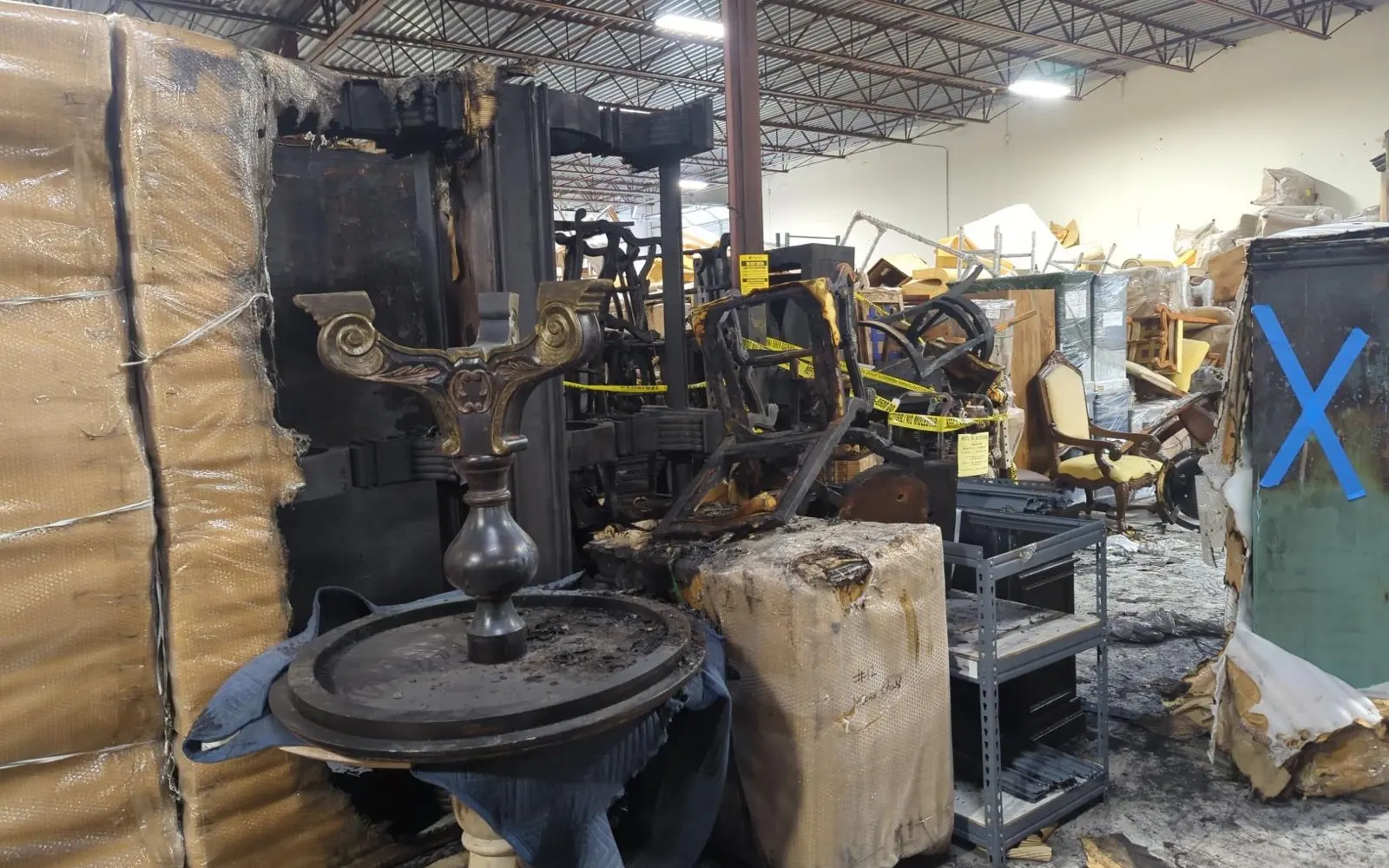
Method
What gets recorded, and why each field matters
01
Identification
Manufacturer · Model · Serial number · Capacity · Year · Nameplate photograph
Identification is what makes a line priceable. A consultant photographs the nameplate or data plate on every unit that carries one, because a model number resolves to a current equivalent and a description does not. On equipment where the plate has burned off, the unit is recorded by physical characteristics — bed size, tonnage, spindle count, voltage — which is usually enough for a dealer to identify the model. This is the single field most often missing from an inventory prepared by someone who does not do this work full time, and its absence is what turns a valuation into a negotiation. More on nameplates and serial numbers.
02
Quantity and location
Count · Room, bay or building · Rack and shelf position · Pallet identifiers
Every item is tied to where it was found. On a single-room loss that is trivial; across a warehouse or a school district it is the only way the inventory can be audited afterwards, and the only way a partial denial can be argued on evidence. Location also determines exposure: stock on the top rack of a bay directly under a failed sprinkler is a different claim from the same stock four bays away. Pallet-level counts are recorded rather than estimated from a shipping manifest, because the manifest describes what arrived, not what was there on the day.
03
Condition and damage
Smoke · Water · Heat · Impact · Contamination · Functional but unreliable
Condition is recorded as observed and photographed, not characterized. Electronics that still power on after smoke exposure are documented as exactly that, because corrosion from acidic smoke residue is progressive and the failure arrives months after the claim closes. The same distinction decides what is worth cleaning, what is worth salvaging and what is a total loss — which is why the inspection that documents the damage is also where salvage opportunities first get identified.
04
Valuation inputs
Replacement cost research · Like Kind & Quality equivalents · Age and depreciation basis
Consultants research current replacement cost against live dealer, distributor and rebuilder markets rather than applying a catalogue figure. Where the original model is discontinued — routine on electronics and increasingly common on machinery — the research establishes a Like Kind & Quality equivalent and records why it is comparable. Both RCV and the inputs needed to calculate ACV are supplied, so the adjuster applies the policy rather than reverse-engineering a number.
A worked example
A restaurant fire where the count was never the problem
A fire in a commercial kitchen left the hood system, prep line and walk-in coolers standing but smoke-saturated. The insured’s own list ran to forty lines and valued the contents at a little over $90,000, built from memory and a handful of invoices.
The consultant’s inventory ran to just under four hundred lines. Not because the insured had understated what was there, but because the list recorded “kitchen equipment, assorted” where the inventory recorded a Vulcan six-burner range with a specific model number, a 2018 Hobart mixer with its serial plate photographed, forty-eight sheet pans, and the contents of three walk-ins itemized by product and quantity.
The line that mattered most was not equipment at all. Small wares — pans, hotel pans, china, flatware, smallwares in the dish pit — came to a five-figure sum on their own and had appeared nowhere on the original list, because nobody counts a dish pit from memory. That is the category that goes missing on almost every restaurant loss.
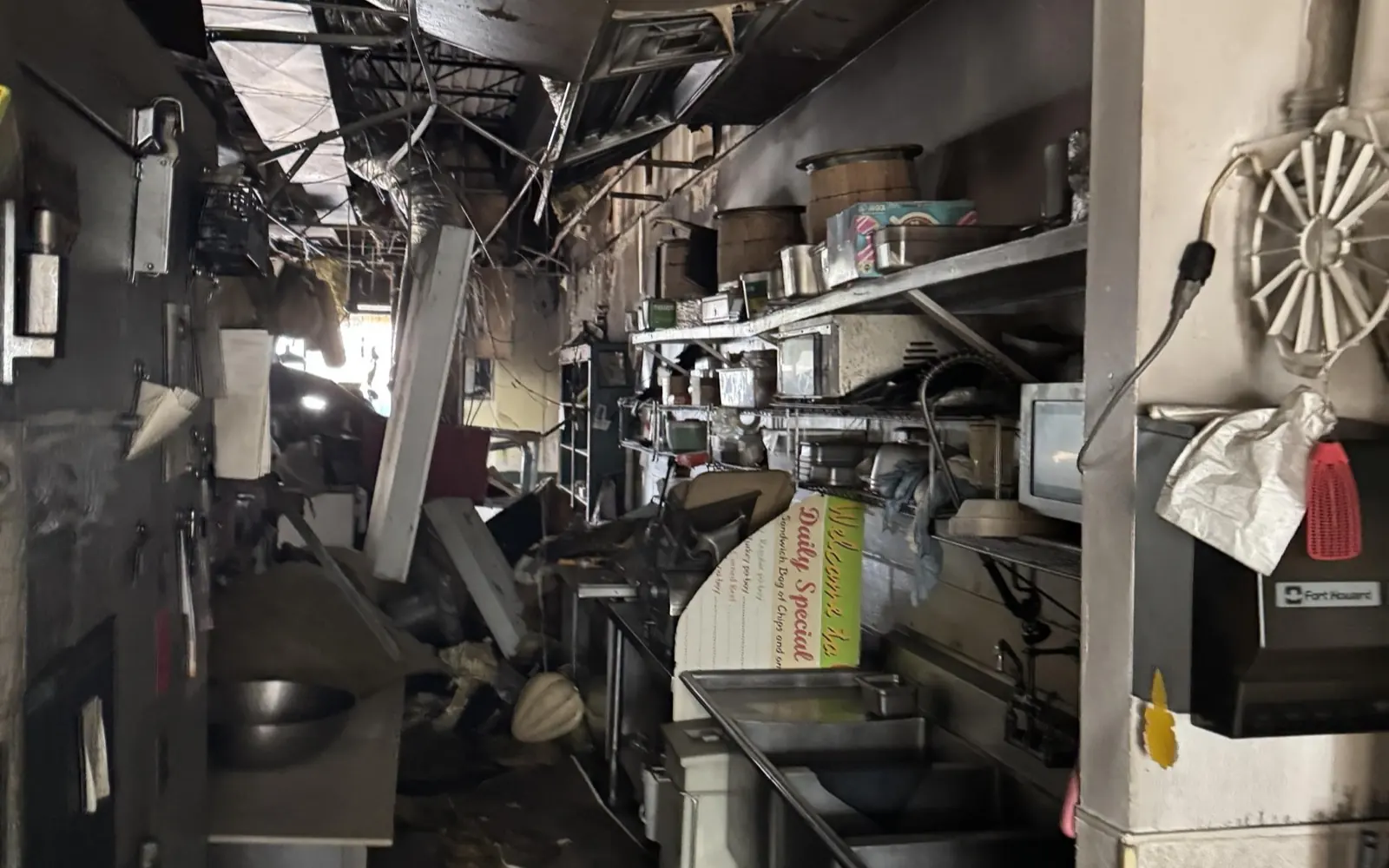
Representative assignment. Clients are not identified without written permission. Photographs are from US Claims Solutions field work and are illustrative of the property class described.
FAQ
Questions adjusters ask about contents inventories
A single retail unit or restaurant is usually one to three days on site. A warehouse or a manufacturing floor runs longer, and a multi-building assignment is scoped by building. The variable is item density rather than square footage: a self-storage facility and a machine shop of the same size are not the same job.
No. Consultants inventory from the property itself and reconcile against records afterwards if any exist. Fixed asset registers, purchase ledgers and prior schedules are useful as a cross-check, and they are frequently wrong — assets are disposed of without being written off, and equipment moves between locations. More on reconciling a fixed asset register.
A line-item inventory with photographs, identifying detail, condition notes, location references and researched replacement cost, delivered in a spreadsheet format your file can absorb. Where salvage was identified, the recoverable items are flagged in the same document rather than tracked separately.
Yes, and it is better to be there before they move. Pack-out is where location data and condition evidence are most often lost. Where a restoration vendor is already engaged, our consultants work alongside them so the inventory and the pack-out list reconcile. More on coordinating with restoration vendors.
Related reading
Go deeper on this
- How a BPP inventory is conducted, step by step
- What adjusters need from a contents inventory
- Out-of-sight contents and under-measured claims
- RCV and ACV on business personal property
- Glossary: business personal property (BPP)
- Glossary: contents inventory
- Property and inventory types we handle
- Commercial and large loss consulting
Need an inventory started this week?
Consultants deploy nationwide, usually within hours of assignment. Tell us the loss location and what is involved and we will scope it on the call.
Last updated