
Primary service 03
Commercial Salvage Consulting & Recovery
Identifying salvage opportunities should begin at the loss site. Our salvage consultants evaluate recoverable property, research markets, solicit qualified buyers and document the final disposition.
Overview
Salvage is decided on the loss site, not at the end of the claim
Salvage recovery is the process of identifying property that retains market value after a loss, putting it in front of buyers who will pay for it, and documenting where it went. US Claims Solutions evaluates recoverable property during the inspection itself, researches the markets that actually buy that class of goods, runs a competitive bid, manages removal and reports the final disposition against the claim. The recovery offsets the loss; the documentation is what makes it defensible.
Timing decides the number. Property that is marketed in the first fortnight sells into a live market; the same property after ninety days in a damp building has lost condition, the buyers have filled their capacity elsewhere, and storage has quietly eaten the upside. When to evaluate salvage is a question with one answer: at the inspection, before anything moves.
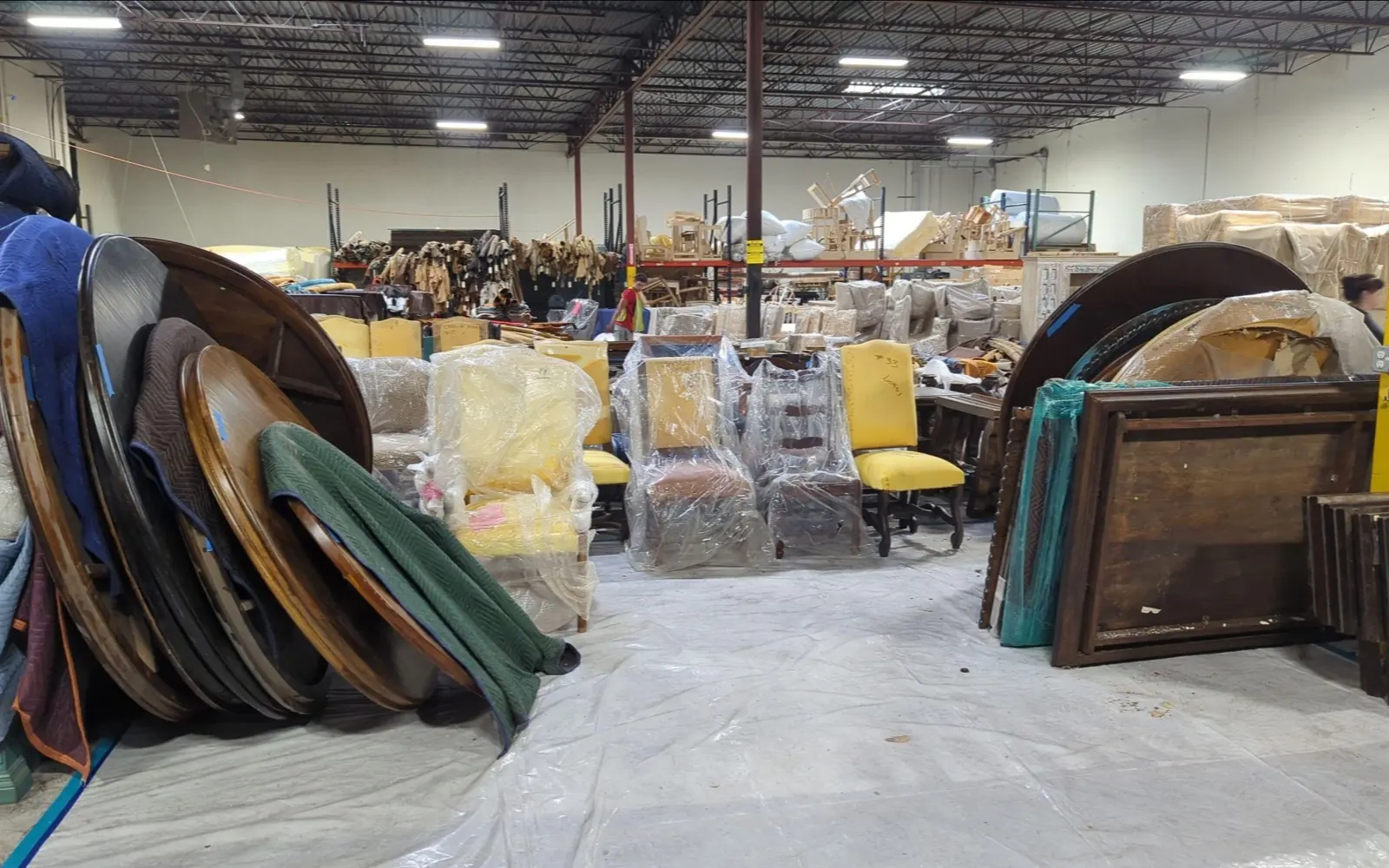
Method
From identification to documented disposition
01
Deciding what is actually recoverable
Condition · Remaining life · Market depth · Cost to remove
Recoverable is not the same as undamaged. A press with smoke staining and no heat exposure sells; a cosmetically perfect server that sat in acidic smoke does not, and should not. The test is whether a real buyer will pay more than it costs to get the item out of the building, which means condition, remaining useful life, market depth and removal cost are assessed together rather than in sequence. More on what makes property recoverable.
02
Finding the buyers who pay for this class of goods
Dealers · Rebuilders · Liquidators · Trade-specific brokers · Export buyers
There is no single salvage market. Machine tools go to dealers and rebuilders who know the model; restaurant equipment goes to used-equipment houses; palletized retail stock goes to liquidators; hides, textiles and specialty stock go to trade-specific brokers who may be three states away. Consultants solicit from the market that fits the property rather than from a standing list, which is the difference between a bid and a real price.
03
Running a competitive bid rather than taking an offer
Documented solicitation · Multiple bidders · Written terms · Award rationale
A single offer is not a market test and does not survive scrutiny. Bidders receive specifics — counts, models, condition, photographs, removal constraints — because a bidder guessing at condition bids low to cover the guess. Solicitation, responses and the basis for the award are recorded. More on competitive bidding.
04
Removal, and proving where it went
Scheduling · Site access · Weight tickets · Certificates of destruction
Recovery is not complete until the property has physically left and the paperwork says where it went. Consultants coordinate removal against the restoration and demolition schedule, and where goods must not re-enter the market — branded stock, regulated product, anything carrying a trademark the owner will not release — disposition runs through certified destruction with documentation rather than through a salvage sale. More on brand protection.
A worked example
A manufacturing fire where the machinery was worth more than the stock
A fire in a fabrication shop damaged the building, the finished stock and the machinery on the floor. The initial assumption on site was that the equipment was a total loss and the recoverable value sat in raw material.
It was the other way round. The raw stock had absorbed smoke and water and had no market. Several of the machines had heat exposure limited to sheet metal and paint, with drives, ways and controls intact — property that a rebuilder will buy, refurbish and resell, and which therefore has a real bid behind it rather than a scrap price.
Consultants recorded each machine by manufacturer, model, serial number and observed condition, photographed nameplates and damage, and solicited from machine-tool dealers and rebuilders rather than from general liquidators. The award went to a rebuilder who inspected before bidding. Removal was scheduled around the demolition contractor, weight tickets and transfer documents were filed against the claim, and the recovery offset a meaningful share of the equipment exposure.
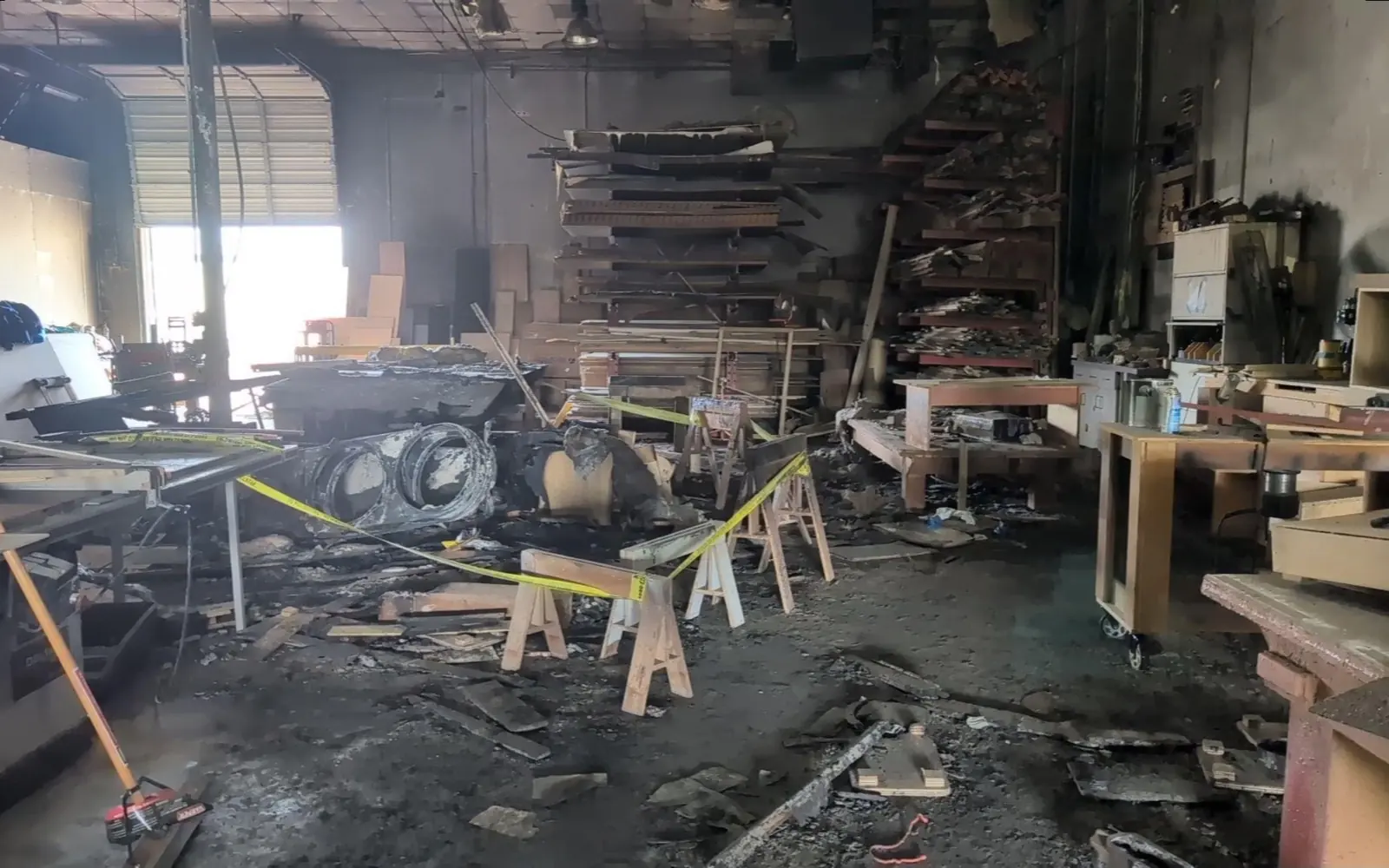
Representative assignment. Clients are not identified without written permission. Photographs are from US Claims Solutions field work and are illustrative of the property class described.
FAQ
Questions about salvage on a commercial claim
It should not, and it usually shortens it. Salvage is evaluated during the inspection that is happening anyway, so identification costs no extra site time. Marketing runs in parallel with the rest of the claim rather than after it.
Then it is not sold. Branded goods, regulated product and anything the owner will not release go to certified destruction with documentation, and the claim carries the disposition record rather than a recovery figure. That is a legitimate outcome, not a failed one.
The buyer removes at their own cost under written terms agreed before the award, scheduled against the site’s access and demolition constraints. Consultants manage the schedule and document what left the building.
There is no fixed threshold, but the economics turn on removal cost, so a single low-value item in a difficult building rarely clears. Concentrated property — a floor of machinery, a warehouse of palletized stock, a kitchen of commercial equipment — almost always does.
Related reading
Go deeper on this
Recoverable property on a live loss?
The earlier salvage is evaluated, the more of it there is. Tell us what is in the building and we will assess it during the inspection.
Last updated